
Vesperine research desk
No content-farm horoscopes. Each piece needs method, sources, counter-signals, and a visible review trail; practitioners can contribute guest notes to the public research record.
Published essays
When Does the 2027 Goat Year Actually Start? Three Different New Years, Explained
Ask when the Goat year begins and you can get three defensible answers: 1 January is the civil year the bank uses; Chinese New Year day one (6 February 2027) is when the reunion dinner and red packets happen; and Li Chun, the 'Start of Spring' solar term around 4 February 2027, is when a BaZi chart flips its year pillar. Malaysians mix these three lines daily and it usually doesn't matter — until a baby arrives in early February, or you try to line up a Tai Sui clash list against the wrong calendar. This article separates the three boundaries so every Goat-year article you read afterwards makes sense.
Goat Year 2027 Zodiac Clashes: What 冲太岁 Actually Means (and What It Doesn't)
Every Chinese New Year, Malaysian Chinese families run through the same list: which zodiac signs 'clash with the Tai Sui' this year. For the Ding Wei Goat year starting February 2027, the signs traditionally named are the Goat itself, the Ox, the Rat and the Dog. This article explains where those four come from structurally — the clash, punishment and harm relationships between earthly branches — why the same list appears everywhere, and how to read a clash year as a planning signal rather than a verdict. No rituals required, no doom promised.
Ding Fire Meets Your Day Master: The Five-Element View of the 2027 Goat Year
Most CNY 2027 forecasts will sort readers by zodiac animal. BaZi practitioners sort by something else first: the day master, the element of your day of birth. This guide explains what a day master is, how the Ding Fire stem and Wei Earth branch of 2027 interact with each of the five elements, and why two people with the same zodiac sign can experience the same year completely differently.
Before You Buy a Reading: Turning a Vague Worry into a Question BaZi Can Actually Address
Most disappointing readings fail before they begin — the question was never askable. This guide shows how to turn a fog like 'should I quit my job?' into a question with a subject, a time window, and an observable outcome; what a BaZi report can and cannot answer; and how to evaluate the reading you get.
The 2027 Ding Wei Goat Year: A Malaysia-Friendly Guide to Reading Your Annual Cycle
Chinese New Year 2027 falls on 6 February, opening the Ding Wei (Fire Goat) year. Before the zodiac-ranking listicles arrive, this guide explains what an annual cycle (liu nian) actually is in the BaZi framework, why the year technically has two possible start dates, which zodiac branches the Goat year interacts with, and how to use annual forecasts as a self-review checklist rather than a verdict.
How to Use Oracle: Let AI Organize the Details, Then Bring the Deeper Questions to a Human Teacher
A practical usage guide and platform ethics statement for Oracle. Start with one real question, use Tarot to surface the first signal, use BaZi, Zi Wei, the I Ching, Qi Men, and Six-System Oracle Reading to examine structure and change, then bring the report to a human teacher when the question needs deeper judgment, life context, and compassion.
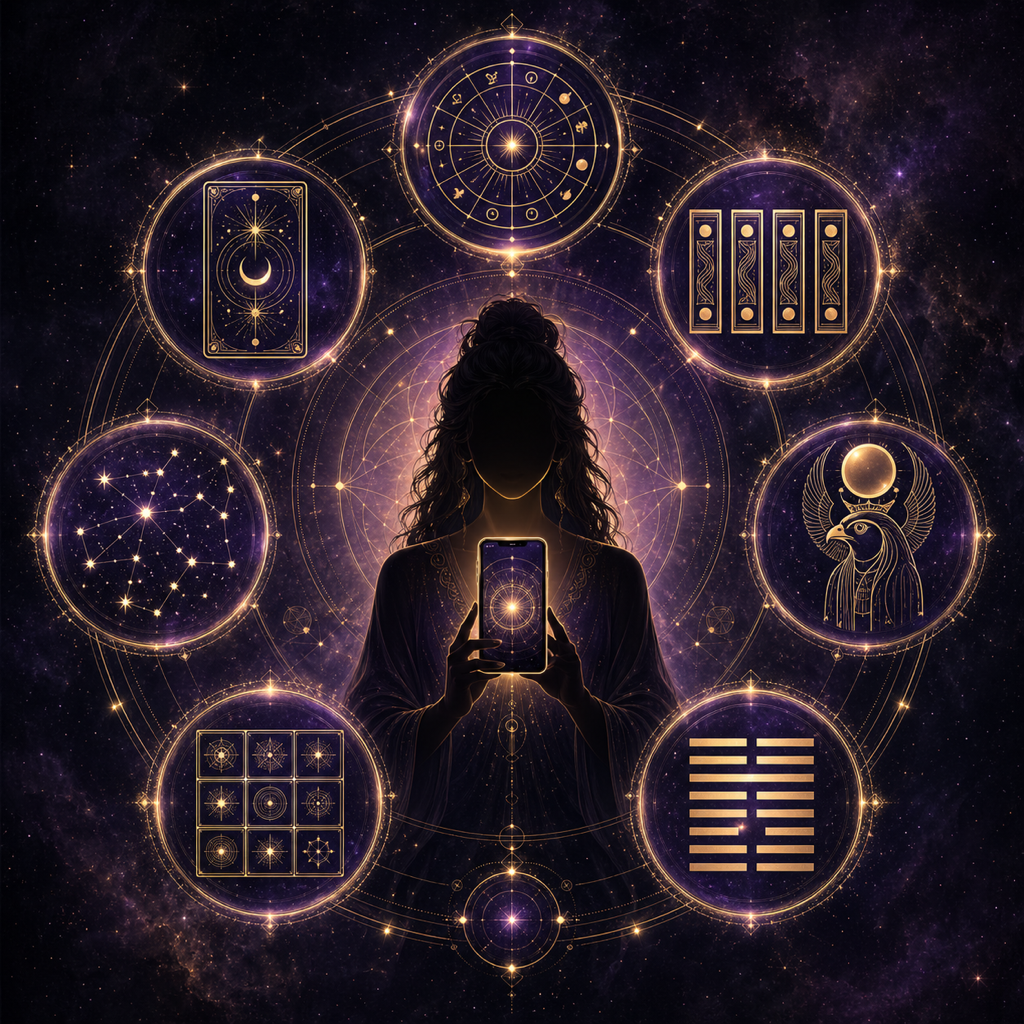
Why I Created Oracle: When Ancient Divination Meets High-Dimensional AI
A founder letter on why Oracle begins with a card, opens into a chart, and then cross-checks one real question through Tarot, BaZi, Zi Wei Dou Shu, Qi Men Dun Jia, the I Ching, and the Egyptian Oracle. Oracle is not built to turn destiny into a verdict. It is built to make complex life signals visible, comparable, and actionable.
Why Oracle Doesn't Let You Re-Roll: The Design Philosophy Behind Drawing Blind
Most modern tarot apps quietly compromise their own readings by letting users re-shuffle, swipe-to-pick, or 'feel which card calls them.' That's not a reading; it's a mood board. This essay explains why the architecture of drawing blind exists, where it comes from in the classical literature, and what it changes about the moment between asking and knowing.