
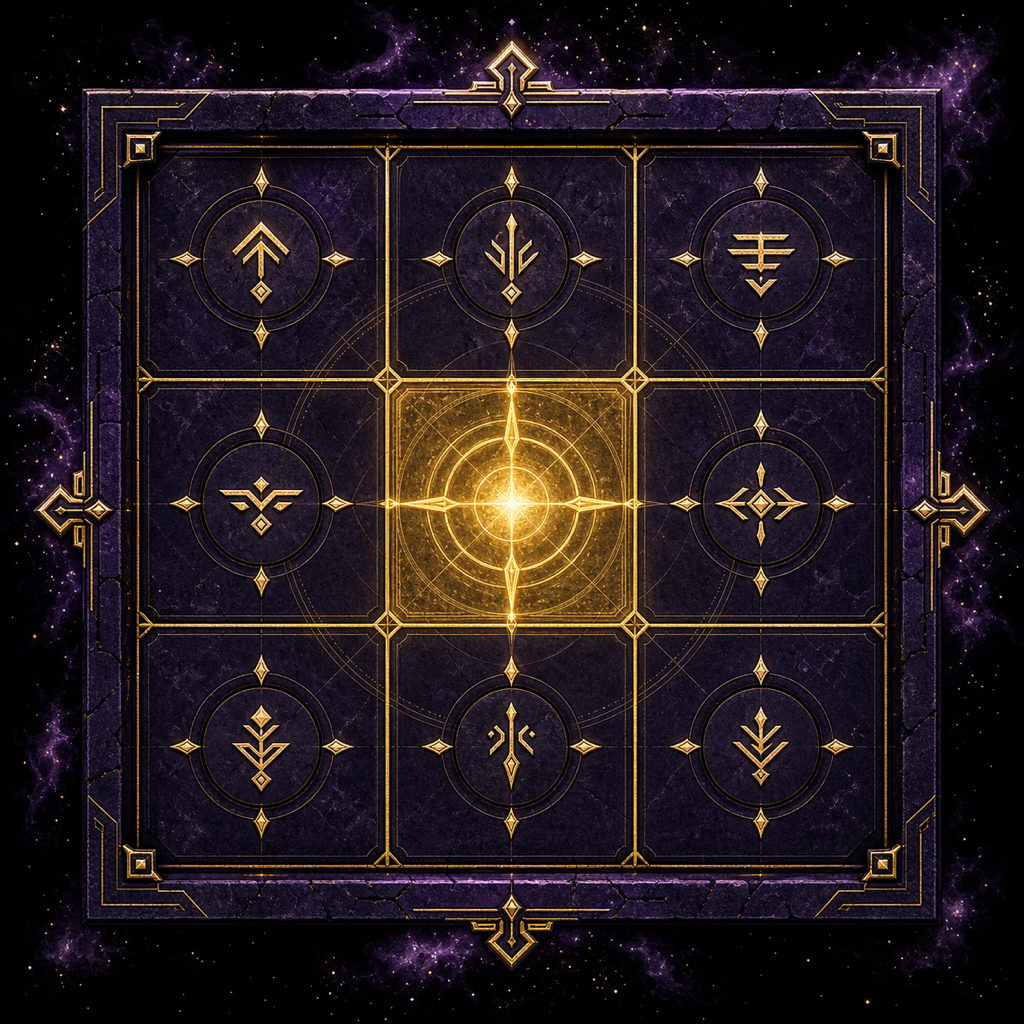
The palace is the stage
A Qimen chart is not a list of symbols floating in the air. Every gate, star, spirit and stem lands inside one of nine palaces. The palace gives the symbol a location, an elemental quality, and a relationship to the other parts of the chart.
This is why Qimen feels more strategic than personality-based divination. It asks where the useful door is, where the pressure sits, where the other party stands, and whether your own position has enough strength to move.
Direction matters, but not mechanically
The palaces correspond to directions, so traditional Qimen often speaks about moving toward or away from a certain direction. In modern use, that should be handled carefully. A direction is not a magic command. It is a prompt to ask where opportunity, visibility, support or resistance is located.
For a business question, direction may translate into which market, department, customer segment or communication channel has the better opening. For a personal question, it may translate into whether the next move should be public, private, direct, delayed or routed through another person.
Read the pattern before the omen
Beginners often ask whether a palace is lucky. A stronger question is: what role is this palace playing in the situation? Is it carrying the self, the other party, the goal, the hidden blocker, or the resource needed to proceed?
Oracle uses Qimen as a decision layer. The nine-palace map helps the report avoid generic advice by showing which part of the situation is strong, which part is blocked, and where the next practical move should be tested.