
Learning Hub
Explore the history, theory, and modern applications behind every reading. Each listed article is available in full.
Each path is organised as terms first, evidence second, action last. Use it as a pre-reading index or a longer self-study map.
Ask first: what gives the Day Master support?
Ask first: which palace is carrying the present question?
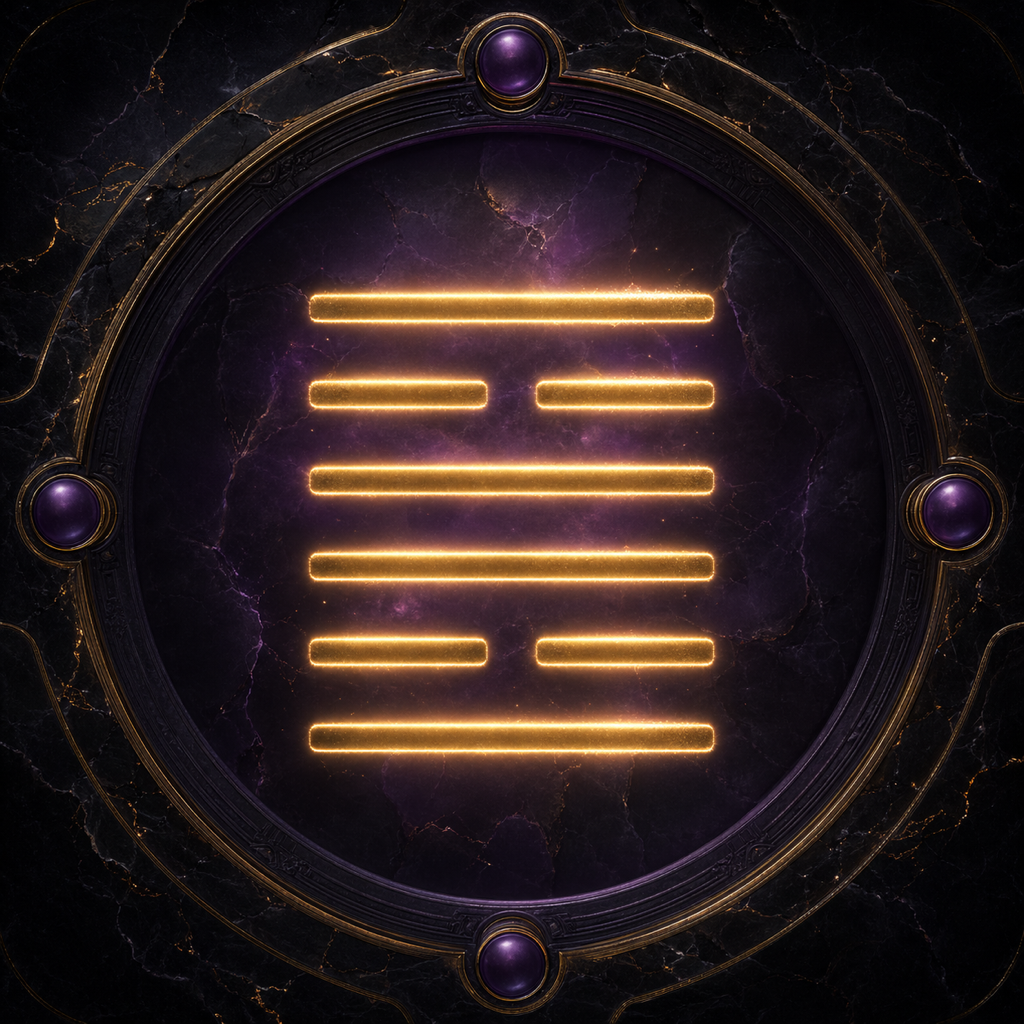
Ask first: how is this situation changing?
Ask first: hold, move, or change strategy?
Ask first: do both traditions point to the same tension?

Ask first: am I trying to see the shape of how we relate, or hoping for a verdict?
Ask first: is the card naming emotion, obstacle, or next step?
Ask first: what responsibility does this deity symbol ask me to face?
Bazi (Four Pillars)
4 full articles, about 24 min
What is Bazi? A Complete Introduction
From stems and branches to the five elements, understand the core architecture of Four Pillars astrology.
The Ten Gods: What Do They Represent?
The Ten Gods are the language of Bazi. Understanding them unlocks every term in an AI reading.
Day Master Strength: Are You Strong or Weak?
Your Day Master is your core self. Its strength determines which elements support or challenge you.
Luck Pillars: The Decade Rhythms of Destiny
Major luck cycles run ten years; annual luck runs yearly. Their intersection creates fortune's peaks and valleys.
Ziwei Doushu (Purple Star)
3 full articles, about 19 min
What is Ziwei Doushu? The 12-Palace System
Twelve palaces from the life palace to the travel palace, each governing a domain of life.
The 14 Major Stars: Characters and Placements
Purple Star governs ambition; Tian Ji governs strategy; Tai Yang governs brilliance. A guide to each star.
The Four Transformations: Luck, Power, Status, Obstruction
The Four Transformations are Ziwei's most nuanced concept. Hua-Ji is not always bad; Hua-Lu is not always great.
I Ching (Book of Changes)
9 full articles, about 64 min
What is the I Ching? An Honest Introduction to the Book of Changes
Three thousand years older than Western astrology and structured around deliberate chance, the I Ching reads the shape of a situation — not the destiny of a person.
How to Cast the I Ching: Coins, Yarrow Stalks, and No Re-Rolls
Casting is not theatre. It is a disciplined way to commit to a question before the result appears.
Where the 64 Hexagrams Come From: Trigrams, Upper and Lower Images
The 64 hexagrams are not fortune-cookie labels. They are situation structures built from paired trigrams.
Changing Lines and the Transformed Hexagram
The primary hexagram describes the present; changing lines show the sensitive points; the transformed hexagram shows where the situation is moving.
How to Read the Judgement, Image, and Line Texts
Classical I Ching text constrains interpretation. It should not become a blank screen for whatever the reader wants to say.
How to Ask the I Ching: Turn Anxiety into a Readable Question
A good question gives the hexagram something concrete to answer; a bad question lets any answer fit.
I Ching vs Six Lines: Textual Reading, Na Jia, and Role Structure
The I Ching and Six Lines are related, but they are not the same reading method.
Using the I Ching for Modern Decisions
The I Ching is most useful when uncertainty is real but action cannot be delayed forever.
How to Judge an AI I Ching Reading
A good AI I Ching report needs evidence, line logic, limits, and practical next steps.
Qimen Dunjia
5 full articles, about 36 min
What is Qimen Dunjia? A Time-and-Space Decision Map
Qimen Dunjia reads the timing, direction and tactical shape of a question through nine palaces, eight gates and symbolic forces.
The Nine Palaces in Qimen: How to Read the Map
The nine palaces give Qimen its spatial grammar: where the pressure sits, where resources gather, and where a move may open.
The Eight Gates: Qimen's Vocabulary of Action
Open, Rest, Life, Harm, Delusion, Scenery, Death and Fear are not simple good-or-bad labels. They describe what kind of action fits the moment.
How to Ask a Qimen Question Without Blurring the Chart
Qimen works best when the question names an action, a time window and the decision you actually control.
Qimen for Business Decisions: Timing, Leverage and Risk
In business, Qimen is strongest as a tactical check on launches, negotiations, partnerships and communication windows.
Western Astrology Bridge
5 full articles, about 36 min
Western Astrology vs Bazi: How the Two Maps Differ
Western astrology gives a familiar language of planets and signs; Bazi reads elemental timing through the Four Pillars. They answer different kinds of questions.
Astrology Houses vs Ziwei Palaces: Two Ways to Divide a Life
Western houses and Ziwei palaces both divide life into domains, but they do it with different assumptions and different kinds of evidence.
Transits vs Bazi Luck Cycles: Two Clocks for Timing
Astrology watches planets moving now; Bazi watches ten-year luck pillars and annual triggers. Together they give timing more texture.
Aspects vs Five Elements: How Charts Show Tension
Astrology aspects describe angular relationships between planets; the five elements describe generation, control and imbalance.
Synastry vs Eastern Relationship Reading: Compatibility Without Cliches
Western synastry compares two charts by planet contact; Bazi and Ziwei examine relationship roles, timing and life-domain pressure.
Relationships & Compatibility
6 full articles, about 47 min
Bazi Compatibility: What Two Charts Reveal About a Relationship
Putting two Bazi charts side by side won't score your love out of ten. It shows how two people's patterns meet — where you steady each other, and where the same friction keeps returning.
Astrology Synastry: Are You Actually Compatible? (Moon, Venus, Mars)
Synastry compares two birth charts to read the chemistry between them. Done well, it's honest about both the spark and the friction — and it never reduces a real relationship to a compatibility score.
How to Read a Relationship Tarot Spread (With Reversals)
A relationship spread works best when it reads the dynamic between two people — not when it tries to read someone's mind. Here's a layout, what reversals add, and how to keep the reading honest.
Bazi vs Astrology vs Tarot for Relationships — Which Fits You
Three very different lenses on the same relationship question. Astrology reads chemistry, Bazi reads patterns and timing, tarot reads the question on your mind right now. Here's how to choose.
Can a Reading Tell If He Likes You? What It Can and Can't Show
It's one of the most common questions people bring to tarot and astrology — and the honest answer matters. A reading can't read someone else's mind, but it can show you something far more useful.
Should I Stay or Go? How Divination Helps You Decide (Not Decides for You)
When you're torn about a relationship, a reading can bring real clarity — but the choice has to stay yours. Here's how to use divination to think honestly, and where to set it down.
Tarot Stories
5 full articles, about 27 min
Why the First Card Is Face-Down: Oracle's Design Philosophy
If you can choose which card to flip, you'll choose the one you wanted to be true — and you stop reading. The whole architecture of divination exists to deny you that choice.
The 22 Major Arcana: Deep Meanings of Each Card
The Fool's journey from card 0 to the World — twenty-two archetypes mapping the soul's evolution.
Three-Card Spread: Past, Present, Future Logic
One of the most powerful spreads. How to read three cards as a single coherent story.
Jung and Tarot: An Archetypal Psychology View
Jung's theory of archetypes gives tarot a modern psychological grounding. Every card is a collective unconscious image.
Tarot Ethics: What Questions Are Worth Asking?
Tarot is not a prediction machine. Ask 'how should I see this?' not 'does he love me?' Ethics make readings more powerful.
Egyptian Wisdom
3 full articles, about 18 min
The Egyptian Pantheon: Cosmic Order of the Gods
From Ra's creation to Osiris's resurrection, ancient Egypt built one of humanity's earliest cosmologies.
The Magic of Isis: Source of Ancient Healing
Isis was Egypt's greatest magician; her healing spells influenced the entire Western mystery tradition.
Thoth's Wisdom: Sacred Writing and Universal Knowledge
Thoth is the patron of writing, wisdom, and magic. The Hermetic tradition traces directly to his teachings.
Once you understand these foundations, every line of an AI reading will come alive.