
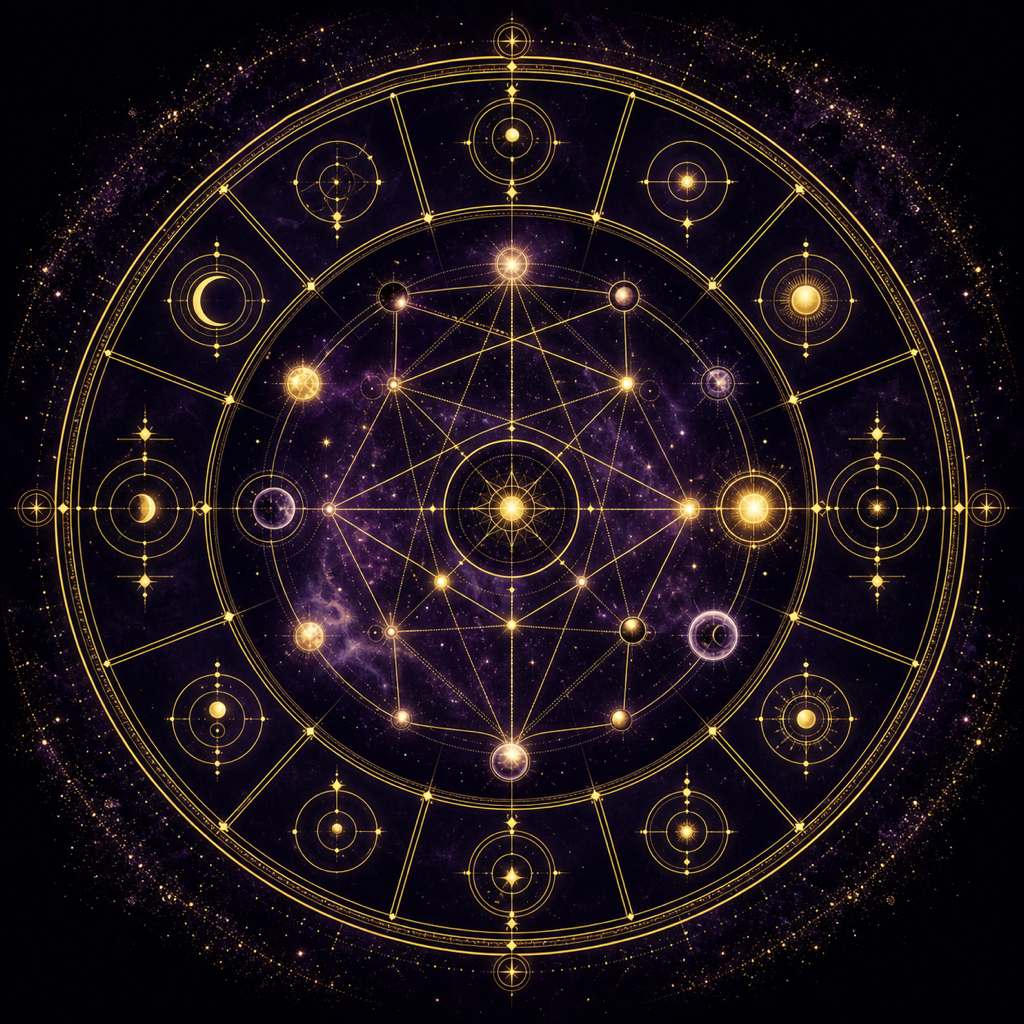
Aspects are relationships by angle
In Western astrology, aspects show how planets speak to one another. A conjunction intensifies. A trine flows. A square creates friction. An opposition creates polarity. A sextile offers workable opportunity.
Aspects are one reason a natal chart becomes richer than a list of signs. Mars in one sign means little until you see whether it is supported, blocked, intensified or pulled into conflict by other planets.
Five elements are relationships by function
Bazi and other Chinese systems use a different grammar. Wood, Fire, Earth, Metal and Water generate, control, drain and support one another. The issue is not an angle in the sky, but whether the chart has flow, blockage, excess, weakness, heat, cold, dryness or dampness.
This can sound unfamiliar to astrology readers, but the underlying concern is similar: a chart is not made of isolated symbols. It is a network of relationships.
Cross-check tension before giving advice
A bridge reading should ask whether both systems identify the same kind of tension. Does astrology show a Mars-Saturn pressure pattern while Bazi shows a heavy Officer or Seven Killings theme? Does a soft Venus pattern appear alongside useful Resource or Output flow?
The point is not to translate every planet into an element. The point is to compare how each system describes pressure, support and release. That makes the final advice less generic.