
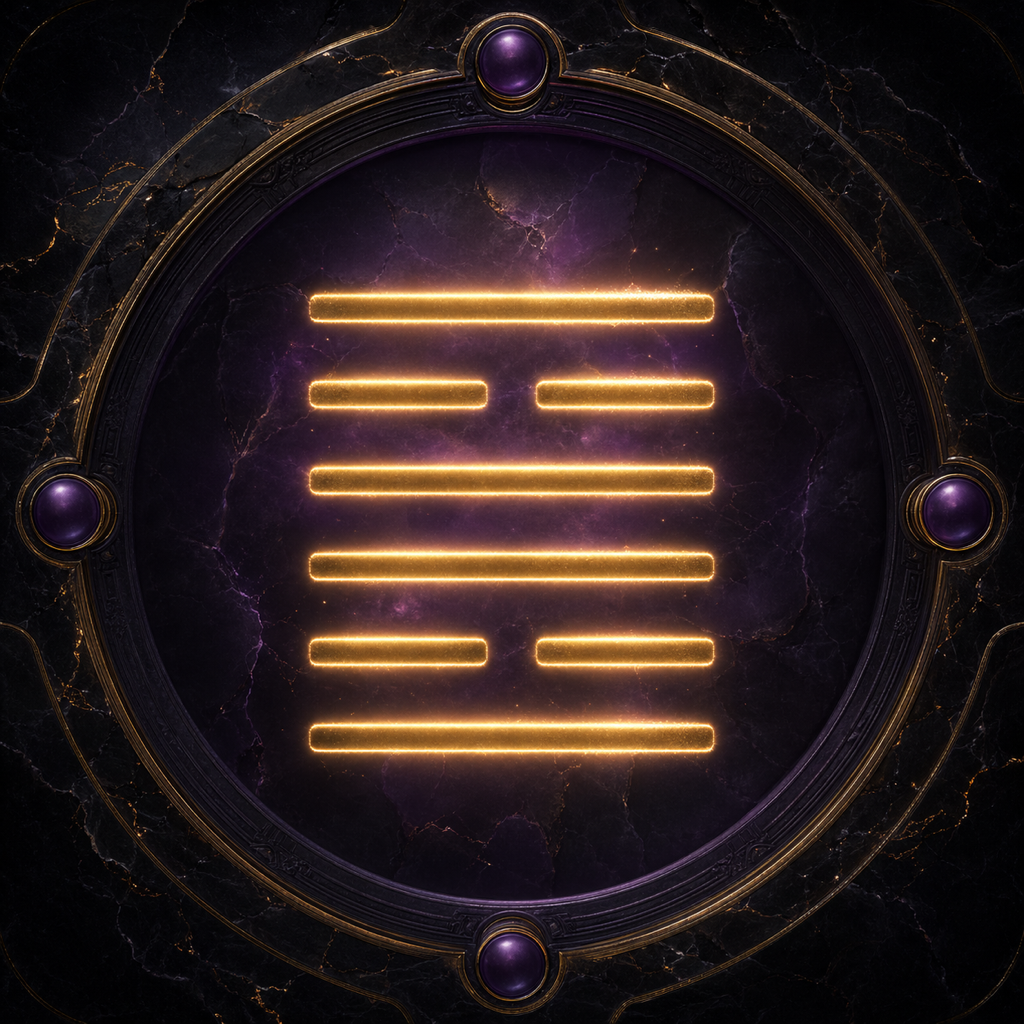
A changing line is the sensitive point
When old yin or old yang appears during casting, that line changes. A changing line marks the part of the situation that is unstable, exposed, or ready to move.
Line position matters. The first line is near the beginning, the fifth is often close to the ruling position, and the sixth may show excess or an end-state. A changing line in each position asks for a different kind of attention.
The transformed hexagram is not a second answer
When changing lines flip, they form a second hexagram. Beginners often read it as a separate result, but it works better as direction: if the present movement continues, this is the shape it tends toward.
The primary hexagram answers 'what is the current structure?' The changing line answers 'where is it moving?' The transformed hexagram answers 'what direction does that movement imply?' Together, they make a time story.
No changing lines is still meaningful
A cast without changing lines does not mean there is no answer. It may mean the situation is relatively stable, or that the current structure should be understood before anyone tries to force a turn.
In Oracle reports, changing lines point to what should be adjusted first. When there are no changing lines, the focus shifts to the present hexagram's limits, discipline, and actionable range.